+91 9824033952
Home / Product Details
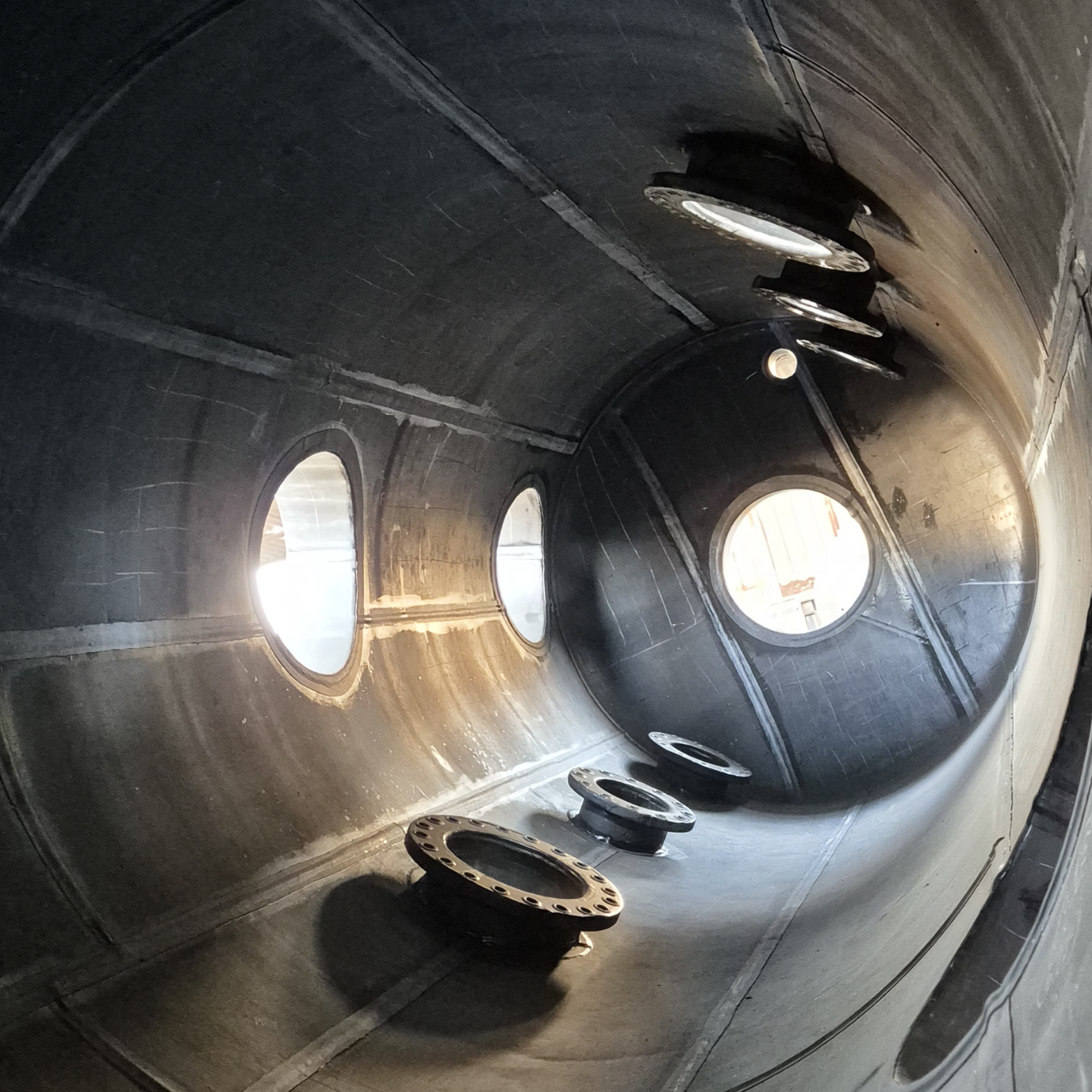
On-Site Rubber Lining is a specialized industrial service that involves applying a protective rubber lining directly at the customer’s facility — inside vessels, tanks, pipelines, pits, sumps, scrubbers, and other fixed equipment where removal for workshop lining is not practical or cost-effective.
Unlike factory-lined components, on-site rubber lining is executed by experienced technicians who prepare the equipment surface in place and apply rubber lining materials (natural rubber, neoprene, EPDM, nitrile, or hard rubber) using industry-standard procedures. This ensures corrosion and abrasion protection for large, welded, or immovable structures that cannot be easily transported.
This service is especially valuable for large process vessels, underground pits & trenches, ducting systems, and field-installed equipment in chemical, mining, power, and wastewater industries.
1. Tailored, In-Place Lining
On-site rubber lining allows coating of large or fixed equipment that cannot be economically moved to a factory. This includes:
Large storage tanks
Industrial pits & sumps
Long pipelines
Scrubber chambers
2. Superior Corrosion & Chemical Protection
Applied rubber lining provides a highly resistant barrier against corrosive media — acids, alkalis, salts, solvents, and industrial chemicals — which helps extend equipment life.
3. Excellent Abrasion Resistance
Rubber protects internal surfaces exposed to wear-inducing slurries or solid load fluids, greatly reducing surface erosion and maintenance frequency.
4. Reduced Downtime & Installation Costs
Since on-site lining eliminates the need to dismantle and transport heavy equipment, it significantly cuts:
Downtime
Project logistics costs
Transit risks and handling delays
5. Uniform Bonding & Seamless Protection
Field-applied rubber lining is installed with precise surface preparation, bonding techniques, and thickness checks to ensure:
No dead zones
Continuous protection across corners, welds, and tough-to-reach areas
6. Customizable to Conditions
Material selection and thickness can be tailored based on:
Media type (corrosive/abrasive)
Operating temperature
pH levels
Flow conditions
This customization ensures correct performance for each unique service environment.
7. Quality Inspections & Testing
On-site lining projects typically include:
Surface prep checks (blasting / cleaning)
Adhesion testing
Thickness validation
Final inspection before handoff
This ensures the on-site lining meets performance standards comparable to workshop linings.
On-site rubber lining is widely used across industries where large, fixed, or hard-to-move equipment needs long-term corrosion and wear protection:
Chemical & Petrochemical Plants
Inside scrubbers, reactors, and process vessels
Corrosion control in chemical storage pits
Water & Wastewater Treatment
Treatment tanks
Clarifiers & equalization basins
Sumps and trenches
Power Plants
Flue gas desulfurization chambers
Ash transfer pits
Cooling system sumps
Mining & Mineral Processing
Tailings ponds
Slurry trenches
Cyclone feed chutes
Steel & Heavy Industries
Pickling tanks
Cooling pits
Corrosive waste holding areas
Oil & Gas Facilities
Pipeline bends
Pump sumps
Large fixed scrubbers and separators
Pulp & Paper Industry
Chemical mixing tanks
Loading pits
| Feature | Benefit |
|---|---|
| Field application | No relocation of fixed equipment required |
| Abrasion & corrosion shield | Extends equipment life significantly |
| Flexible material choice | Optimal protection for specific chemical loads |
| Reduces logistical costs | Saves time and transport expense |
| Custom-engineered lining | Meets site conditions and operational needs |