+91 9824033952
Home / Product Details
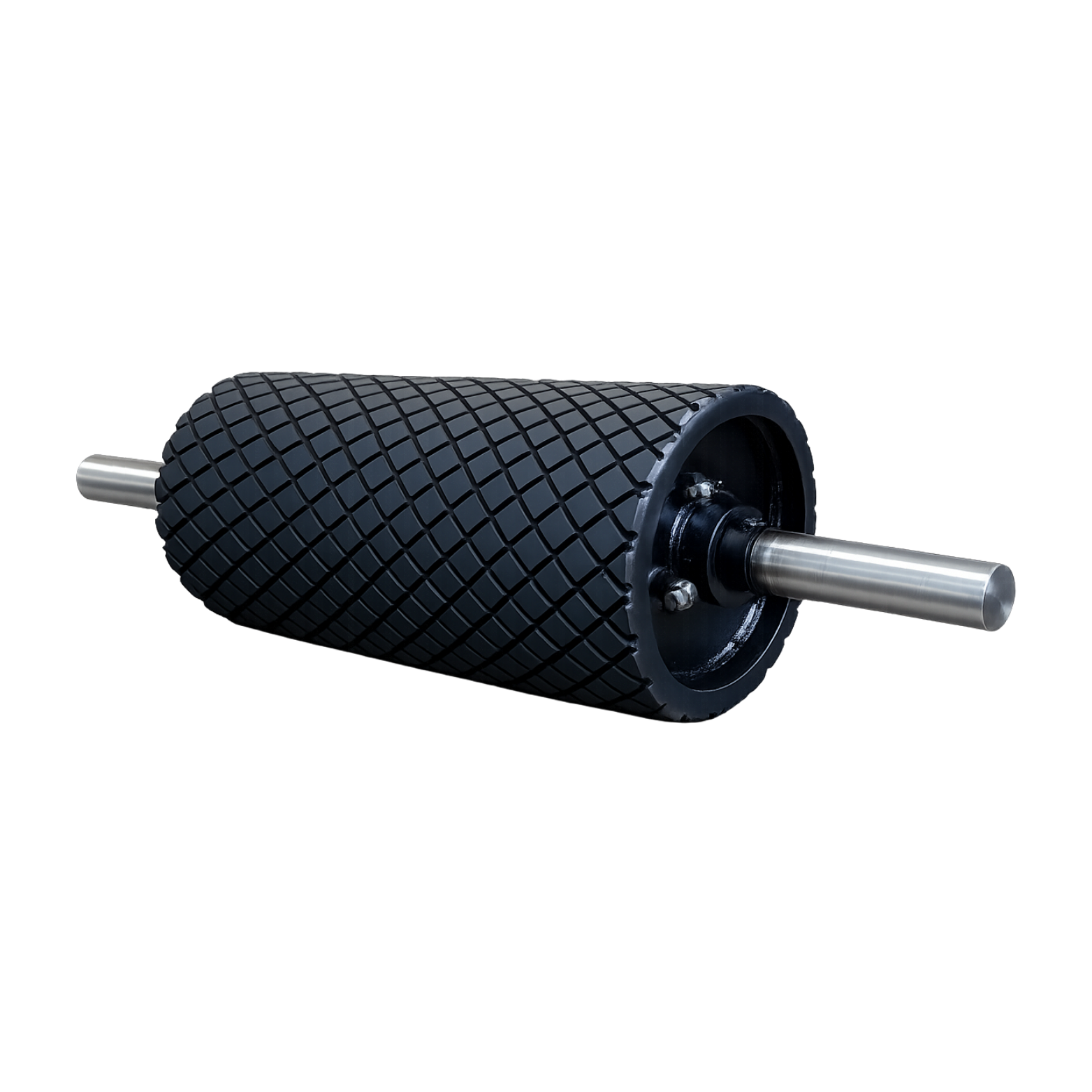
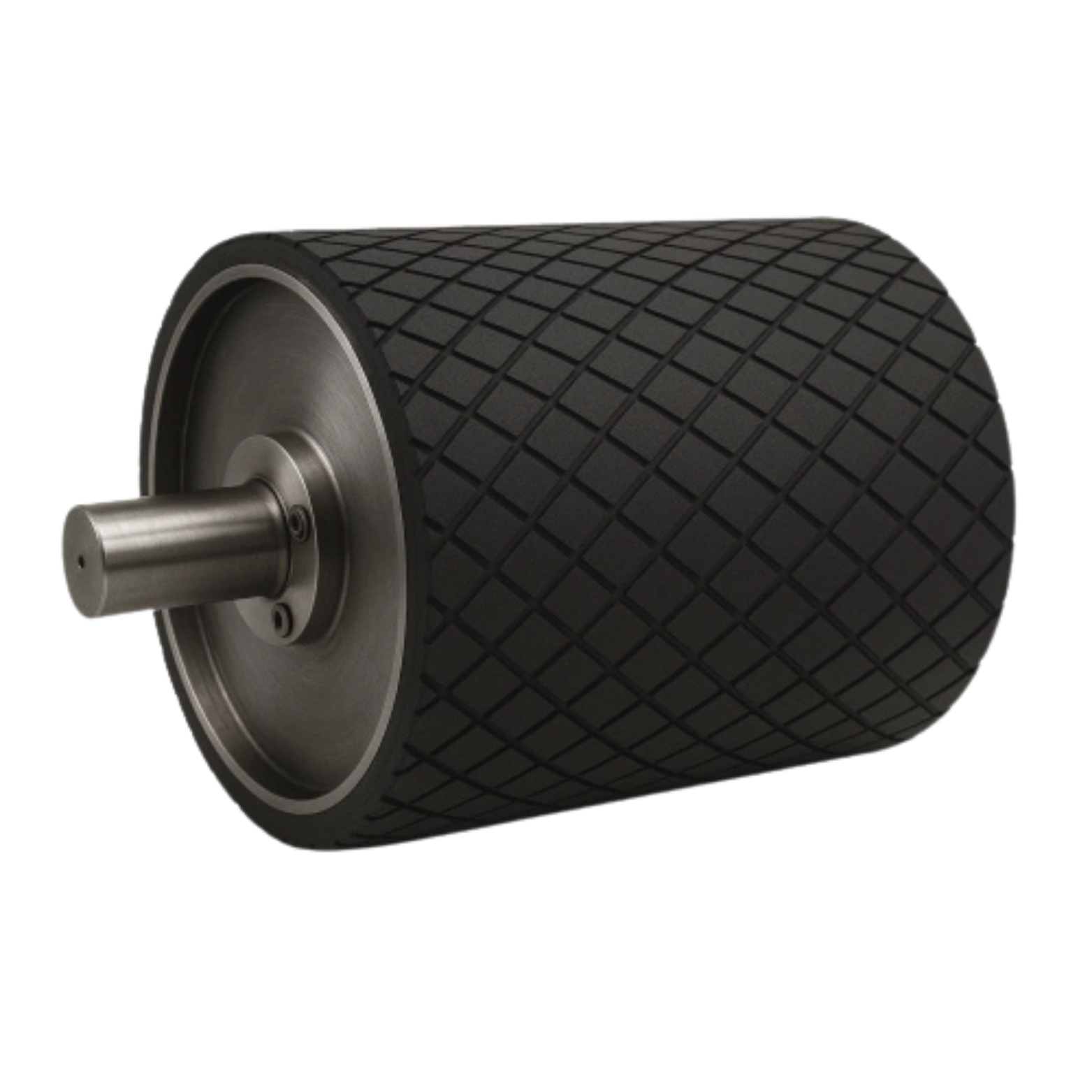
Pulley Laggings are rubber covering layers that are bonded to the surface of conveyor pulleys to enhance friction, protect pulley surfaces, and improve belt drive performance. They are specifically designed to increase pulley grip, prevent belt slippage, reduce wear on belts and pulleys, and provide long-lasting performance under demanding conditions.
Pulley laggings are available in various designs including plain rubber lagging, chevron/diamond pattern lagging, and profiled lagging to match application requirements such as incline conveyors, heavy load handling, wet conditions, and high-speed operation.
Typically made from premium rubber compounds with good abrasion resistance and grip characteristics, they are widely used in material handling industries where belt conveyors and pulley systems are critical to operations.
🔩 1. Improved Belt Traction
High-friction rubber lagging significantly increases the contact grip between the pulley and conveyor belt, minimizing belt slippage and maximizing power transfer.
🛡️ 2. Enhanced Wear Resistance
Made from rugged rubber compounds, pulley laggings protect the pulley surface from wear and abrasion, extending the life of both pulleys and conveyor belts.
🔊 3. Noise Reduction
Rubber laggings absorb vibrations and reduces noise generated by belt and pulley contact during operation.
🌀 4. Better Load Handling
Chevron and profiled lagging improve belt tracking and grip, especially on inclined or heavy-load conveyors, ensuring consistent material flow without belt misalignment.
🔧 5. Corrosion & Weather Protection
Rubber covering protects metal pulley surfaces from corrosion and environmental exposure, extending the longevity of equipment in outdoor or harsh conditions.
🪶 6. Easy Installation
Pulley lagging sheets or strips can be applied to pulley surfaces using adhesive and mechanical fastening methods, allowing replacement or refurbishment of existing pulleys without major downtime.
⚙️ 7. Customizable Profiles
Available in various patterns (plain, diamond, chevron) and thicknesses, pulley laggings can be tailored to match application specifics such as belt type, speed, load, and environmental conditions.
Applications
Pulley laggings are widely used in industries with belt conveyors and drive pulleys, including:
🚚 Material Handling & Logistics
Inclined and horizontal conveyors for bulk material handling
Port and terminal operations
Airports (baggage conveyors)
🏭 Mining & Quarrying
Ore, coal, aggregate, and mineral conveyors with heavy loads and demanding environments
🛠️ Cement & Construction
Cement clinker conveyors
Heavy-duty aggregate handling
💧 Power & Utilities
Ash handling systems
Fly ash and bottom ash conveyors
🧪 Chemical & Petrochemical
Corrosive environments where pulley surfaces need protection and reliable belt engagement
📦 Manufacturing & Packaging
Conveyor lines for assembly, packing, and automated material movement
🛳️ Ports & Bulk Terminals
Maritime loading and unloading conveyors handling high-capacity materials
| Feature | Benefit |
|---|---|
| High friction surface | Minimizes belt slippage and improves efficiency |
| Abrasion-resistant rubber | Extends belt & pulley life |
| Chevron / profiled designs | Better tracking on heavy or inclined conveyors |
| Noise & vibration control | Improves working environment |
| Easy retrofit | Can be applied to existing pulleys without replacement |
Rubber pulley laggings help enhance conveyor performance, reduce maintenance costs, and increase equipment uptime, making them an essential component in robust material handling systems.